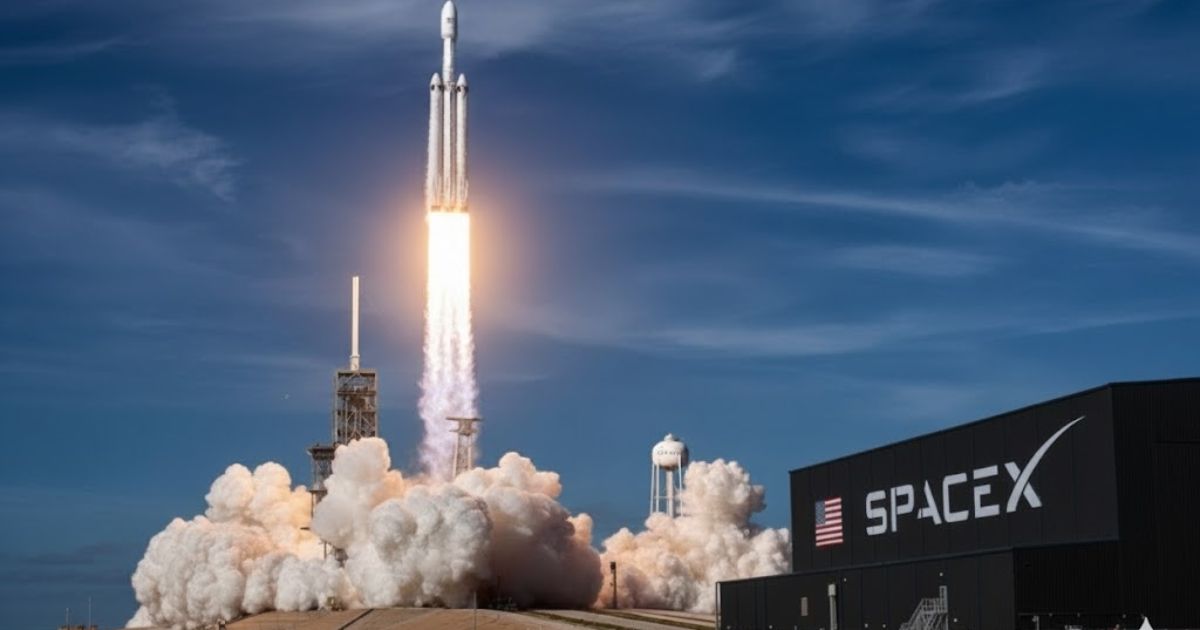
Skyward Bound-There are days that feel routine and days that feel like they’re part of history. Today belongs to the second category. As countdown clocks sync across control rooms, cameras roll in, and engineers hold their breath, the world turns its gaze toward a rocket standing tall on its launch pad—ready to go Skyward Bound. The air around a major launch is electric, as if the atmosphere itself knows something extraordinary is about to happen.
This launch is more than hardware and flame. It is the culmination of years of planning, testing, setbacks, triumphs, late-night calibrations and early-morning simulations. People across the globe—students, space enthusiasts, scientists, journalists, families—are waiting for that moment when the engines ignite and thunder ripples across the sky.
Today’s mission called Skyward Bound promises high-stakes action for good reason. It carries ambition, innovation and human hope on its back. And once that rocket lifts off, it becomes a symbol of what we’re capable of reaching for.
The Calm Before the Roar: What Launch Day Feels Like
If you’ve ever watched a rocket launch in real time, you know the strange mix of silence and intensity that fills the minutes before liftoff. The rocket stands immobile, almost serene, despite knowing the immense explosive power packed inside its engines. Technicians move around like a choreographed dance troupe, each step precise, each gesture intentional.
On days like this, the world of technology feels strangely human. Engineers smile nervously, mission directors triple-check parameters, weather officers stand by their screens, ready to give a green or red signal. For the Skyward Bound mission, these moments are everything. Every sensor reading, every structural check, every data line must align perfectly.
| Element | Why It Matters in the “Skyward Bound” Mission |
|---|---|
| Technology, Strategy, Teamwork, National Ambition | They shape the excitement and tension around today’s high-stakes liftoff |
For viewers watching at home, the countdown is the most nail-biting part. You stare at the clock, knowing the rocket’s fate hangs on digits flipping one second at a time. Whether you’re in India, the U.S., Europe or anywhere else, that adrenaline rush is universal.
A Rocket Built for Ambition: The Vehicle Taking Us Skyward Bound
A mission like Skyward Bound is not just a flight; it’s a feat of engineering. The rocket driving today’s launch has likely gone through years of conceptualization, design iterations, simulations and rigorous testing. Its engines are capable of producing enough thrust to overcome gravity, atmospheric drag and the burdens of the payload strapped to its nose.
Its body is a marriage of metals and composites—strong enough to withstand pressure, light enough to pierce through layers of sky efficiently. The guidance systems inside are like the brain of the rocket, ensuring it stays on course while traveling at speeds that defy imagination.
The first stage is responsible for the explosive push off the ground. The second stage refines that momentum, giving the mission precision and direction. Once these stages ignite and separate, the rest depends on timing, mathematics and meticulous programming. A mission like Skyward Bound succeeds only when all these elements dance perfectly in sync.
What’s Riding on This Mission: The Payload That Makes Skyward Bound Special
Every rocket launch has a purpose, and in the case of Skyward Bound, that purpose is significant enough to draw global attention. Today’s payload may include next-generation communication instruments, navigation systems, scientific sensors, Earth-monitoring devices, commercial modules or a combination of all.
The heart of the payload is often concealed under the rocket’s fairing—white, aerodynamic, almost mysterious. Inside sits the reason the mission even exists. Whether the goal is to improve connectivity, support environmental data collection, help disaster management, boost national infrastructure or explore space further, the payload is the unsung hero of Skyward Bound.
What makes this mission thrilling is knowing that the rocket is not just carrying equipment; it is carrying possibilities. The moment the payload reaches its orbit and starts doing its job, its benefits may ripple through society for years.
The Countdown to Thunder: How Viewers Experience the Launch
Watching a launch like Skyward Bound is an emotional journey whether you are on-site or streaming it live. The camera angles shift between the launch vehicle, the mission control room, the sky above and the ground below. You hear fragments of communication between teams—short, sharp, deeply technical.
Seconds stretch longer than they should as the countdown nears zero. People hold their breath almost involuntarily. When the engines ignite, it’s like watching a sunrise come alive in an instant. Bright flames burst forth, smoke clouds billow and the earth vibrates with controlled fury.
Then comes liftoff. The rocket breaks free from its clamps, rises into the sky, and for a few moments it is more than metal—it is hope taking shape. That is the emotional core of the Skyward Bound experience.
Why Skyward Bound Matters: The Stakes Are Higher Than They Look
The excitement around Skyward Bound isn’t just about the spectacle of launch; it’s about what this mission represents in a broader context. Space missions today are tied closely to national strategy, scientific exploration, commercial opportunity and technological leadership.
A successful launch strengthens confidence not just in the rocket but in the entire ecosystem supporting it. It validates years of innovation, secures future collaborations, attracts investors and inspires students. A rocket launch plays a role in geopolitics, economy, climate studies, disaster response and even cultural pride.
The high-stakes nature of Skyward Bound comes from its potential impact. If it succeeds perfectly, it could redefine how countries or industries approach the future of space. If it encounters challenges, it becomes a lesson—sometimes painful, always necessary—for progress.
The Human Stories Behind the Skyward Bound Mission
Behind every rocket there are people—hundreds or thousands of them—whose hands, minds and hearts built the mission from scratch. These include scientists who conceptualize the rocket, engineers who design its architecture, programmers who develop its software, technicians who assemble each part, safety officers who minimize risk, mission directors who make hard decisions and support staff who work tirelessly behind the scenes.
These are people who miss festivals, skip family gatherings and stay up nights solving problems the world will never know existed. For them, Skyward Bound is not just a launch—it is the culmination of their dedication. When the rocket lifts, so do their emotions. Some cry, some cheer, some sit silently absorbing the moment.
This human element gives the mission warmth and meaning, reminding us that even with all the science and machinery involved, space exploration is fundamentally a human pursuit.
Delays, Risks and Tensions: The Reality Behind the Drama
While launches look flawless on video, the truth is that a mission like Skyward Bound comes with inherent uncertainties. Weather is one of the biggest variables—high winds, thick clouds, lightning risk or sudden changes in atmospheric conditions can force last-minute holds.
Technical issues may arise too. A single abnormal reading in the rocket’s systems can trigger an automatic halt because safety and mission integrity outweigh every other factor. Sometimes delays can stretch for hours or even days, leaving viewers anxious but teaching patience and respect for precision.
What keeps the mission exciting is knowing that despite all these risks, teams push forward because the rewards are so immense. Whether Skyward Bound launches exactly on time or after a delay, the world still watches with eager anticipation.
After Liftoff: The Journey Continues Beyond the Clouds
The spectacular part of the launch is only the beginning. Once Skyward Bound leaves the pad, it must follow a meticulously planned sequence. First stage separation is the initial milestone, then the second stage ignites. The fairing opens when the rocket is high enough, releasing the payload to the vacuum of space.
The rocket must then guide its cargo into the correct orbit or trajectory. The slightest deviation could alter the satellite’s lifespan or mission efficiency. Once the payload separates successfully, mission control erupts into celebration, but the work doesn’t end. Teams continue to monitor health checks, calibrations and activation phases for hours or days afterward.
What viewers see as a moment is actually a complex operation that continues long after the rocket has vanished from sight.
Why Missions Like Skyward Bound Inspire Generations
There’s something irreplaceable about watching humanity challenge gravity itself. It triggers curiosity in children, ambition in students, pride in citizens and fascination in dreamers. A mission like Skyward Bound doesn’t just send a rocket to space—it sends a message to every person watching: that we can create, innovate and reach beyond what seems possible.
These moments shape future scientists, astronauts, engineers and explorers. They remind us that progress happens because people dare to look up and imagine a world that is bigger than their own.
A New Chapter in Space Exploration Begins Today
As the world waits for liftoff, one thing is clear: Skyward Bound is more than a mission. It is a moment of unity, aspiration and courage. Whether the rocket climbs into the sky flawlessly or encounters the unpredictable twists space missions often bring, this launch stands as a testament to human determination.
Space will always be challenging, mysterious and demanding—but that’s precisely why we chase it. And today, as the engines roar and the rocket rises, we witness humanity doing what it does best: pushing boundaries.