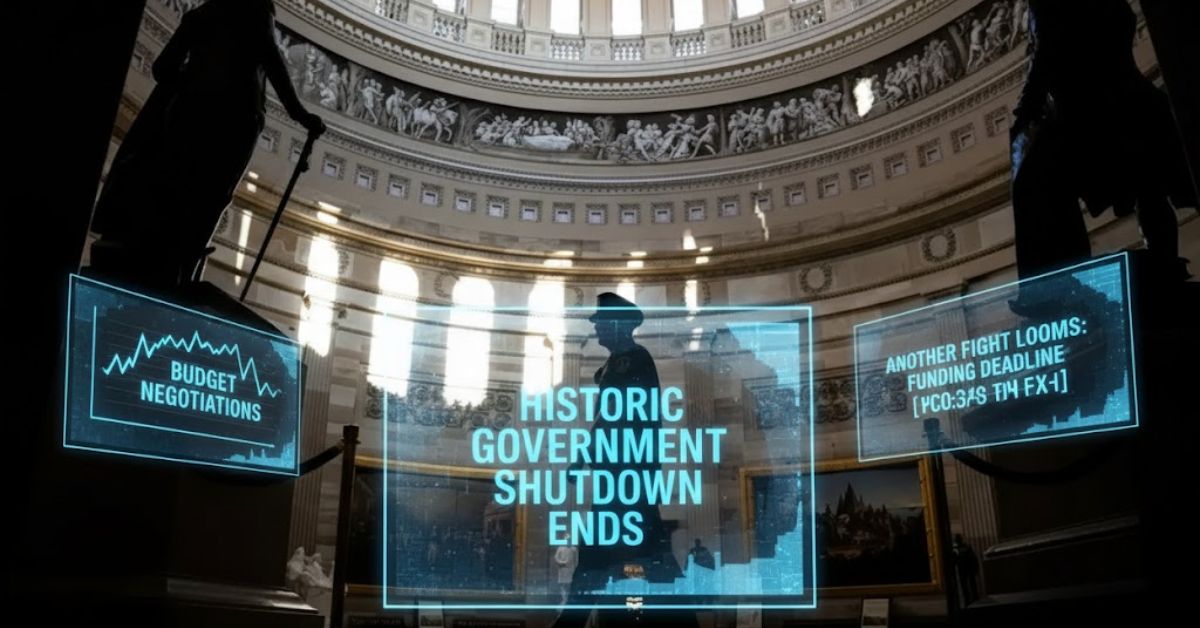
The Shutdown That Stopped the Nation
The United States has been holding its breath as one of the most historic government shutdowns dragged on, fueled by political gridlock and heated debates over federal spending priorities. For weeks, the government has been at a standstill—services frozen, paychecks delayed, and millions left wondering, “What’s next?”
| Key Details | Information |
|---|---|
| Shutdown Duration | Over 20 days |
| Major Cause | Failure to approve the federal budget |
| Key Players | Congress, President, Federal Departments |
| Immediate Impact | Federal workers furloughed, services frozen |
| What’s Next? | Another possible budget crisis coming soon |
It’s not the first time the U.S. government has faced a shutdown, but this time, tensions feel sharper, stakes seem higher, and the uncertainty more exhausting for everyday Americans. While there’s finally progress signaling an end to this crisis, experts are already warning about the looming threat of another budgetary collapse.
This article dives into the past several weeks of turmoil, the larger implications of the shutdown, and the potential perils American citizens may face in the weeks to come as the shadow of another crisis looms large.
Government Shutdown – How Did We Get Here?
Government shutdowns happen when Congress fails to approve a federal budget or when lawmakers cannot agree on temporary funding measures. But what makes this one notable isn’t just its length—it’s the sheer scope of its effects across the country and the deep divisions exposed in its wake.
This particular historic government shutdown stems from two major points of contention:
- Political battles over discretionary spending levels.
- Ideological clashes over funding priorities, with one side focused on curbing federal spending and the other insisting on investing in key areas such as social programs and infrastructure.
These debates snowballed into a grim tug-of-war, leaving millions of federal workers without pay, delaying public services, and forcing ordinary Americans to bear the brunt of the stalemate.
Government Shutdown – Who Felt the Impact of the Shutdown?
America saw firsthand how quickly dysfunction on Capitol Hill trickles down to affect people’s daily lives. Millions of federal workers were furloughed, meaning they were forced to take leave without pay, while others—deemed “essential” workers—had to continue working without paychecks. These were not just faceless bureaucrats but TSA agents, park rangers, food safety inspectors, and the very people who keep America running.
Services ground to a halt. National parks were closed, public sector offices abandoned their desks, and routine government services came to a standstill. Even families awaiting Social Security adjustments or tax clarifications were left hanging, unable to access critical help.
And it wasn’t just federal employees or those who use government services who felt the sting. Businesses tied to federal contracts saw revenues plummet. Airports struggled with staffing shortages, causing travel chaos. Farmers missed important federal payouts tied to agricultural subsidies. Across the country, ripple effects spurred frustration and anger.
A Dual Crisis: Economic and Emotional Toll
The government shutdown bred two types of crises: the financial blow and the emotional toll on workers, families, and businesses. The economic cost was staggering. Though the exact calculation remains murky, early analysis estimated losses in the billions of dollars, especially in regions heavily dependent on the federal workforce.
Imagine living paycheck to paycheck and then going weeks without knowing when or if the cash will flow again. That’s the reality more than 800,000 federal employees endured. Others, particularly contractors, faced an even bleaker picture—they were not guaranteed back pay even after the shutdown ended.
The emotional toll was equally palpable. Families struggled to make mortgage payments, buy groceries, and cover childcare. Parents working low-income federal jobs worried about how much longer they could make ends meet, as anxiety and uncertainty loomed larger than ever.
Government Shutdown – Political Blame Game: Have We Learned Anything?
Whenever a government shutdown occurs, the blame game usually follows. Both political parties took every opportunity to vilify the other. Each aimed to sway public opinion, pointing fingers at the other side for the dysfunction.
Republicans largely framed the shutdown as a necessary evil to achieve long-term spending discipline and end wasteful financial practices within the federal government. Democrats countered, accusing their opponents of irresponsibly holding the nation hostage over ideological demands.
Polls conducted during the shutdown showed that public trust in government reached a new low. Americans voiced their frustrations loudly, noting their exhaustion with hyper-partisanship. Regardless of which side voters identified with, one thing became clear: As the battles continued in Congress, real lives were being hampered by the paralysis.
What’s Next? The Looming Crisis on the Horizon
Ending this shutdown, as hopeful as it may sound, is no cause for celebration. While government services are expected to resume, lawmakers still haven’t resolved the underlying budget disagreements that brought the nation to the brink. Experts are warning that unless meaningful compromises are made quickly, the nation is merely staving off the inevitable—a repeat scenario of another potential budget shutdown.
The current stopgap measures—temporary funding bills providing short-term fixes—serve as band-aids rather than cures. Unless a long-term solution is reached, the groundwork is already being laid for yet another budget crisis to emerge within mere months.
To add to the uncertainty, inflation slows spending recovery, meaning the overall economy remains delicate. The lingering effects of the historic government shutdown are sure to hinder any swift financial repair.
Everyday Heroes: Stories of Resilience Amid the Shutdown
Such a significant event brings with it tales of despair but also remarkable resilience. Across the country, communities stepped up to help furloughed workers and struggling families.
Local food banks carried the weight of feeding government employees with no income. Churches held fundraisers to help with utility bills and car repairs for affected families. Even small businesses offered stepped-up support, from free meals to interest-free loans, showing solidarity during an unprecedented time of need.
These inspiring stories highlight the strength of the American community when hard times hit. However, they also underscore the impracticality of leaving millions of workers dependent on charity while the government fails to do its job.
Key Lessons from This Shutdown – Government Shutdown
As the U.S. edges toward the potential end of this historic government shutdown, it’s imperative to look back at the lessons learned to try and prevent similar crises in the future:
- The Human Costs Are Too High – Families who live paycheck-to-paycheck cannot withstand long periods without income. Every decision taken in Washington deeply affects real Americans.
- Economic Uncertainty Reverberates Farther Than Expected – Shutting down the federal government disrupts systems far outside the direct public sector, hurting businesses in tourism, agriculture, and even education.
- Short-Term Solutions Aren’t Enough – Patchwork measures to avert shutdowns are fragile and unsustainable. Without systemic changes, the nation is at risk of falling into the same rut over and over again.
Table: Shutdown at a Glance
| Aspect | Impact/Details |
|---|---|
| Start of Shutdown | 20+ Days Ago |
| Federal Employees Affected | 800,000+ furloughed or unpaid |
| Economic Loss | Estimated billions in GDP lost |
| Key Sticking Points in Congress | Discretionary spending levels, ideological issues over programs |
| Potential End Date | Imminent |
FAQs About the Historic Government Shutdown
Q: Why did the government shut down?
A: The shutdown occurred because lawmakers couldn’t agree on funding priorities and a federal budget, leading to a suspension of government services.
Q: How long did the historic government shutdown last?
A: The shutdown extended beyond 20 days before progress on reaching an agreement was reported.
Q: Why is it being called a “historic” government shutdown?
A: Beyond its length, the shutdown impacted millions of Americans in unprecedented ways, from widespread unpaid work to disruptions in public services.
Q: Will federal employees get their back pay?
A: Federal workers are typically guaranteed back pay, but contracts for private sector employees tied to federal funds often don’t include such guarantees.
Q: Could another shutdown happen soon?
A: Unfortunately, yes. With only a short-term fix in place, Congress faces yet another potential crisis as budget deadlines loom large again.
Looking Ahead
As the metaphorical dust begins to settle, Americans are left asking: When will government shutdowns stop defining our politics? While the end of the historic government shutdown may provide temporary relief, it also exposes deep fractures in the nation’s governance and budgeting system.
Americans deserve better than a government perpetually locked in gridlock. Voters, policymakers, and communities alike must work toward a culture of compromise and cooperation. Until then, attention shifts to the days ahead. Another crisis might be around the corner, but many are left hoping it’s not “business as usual” anymore.