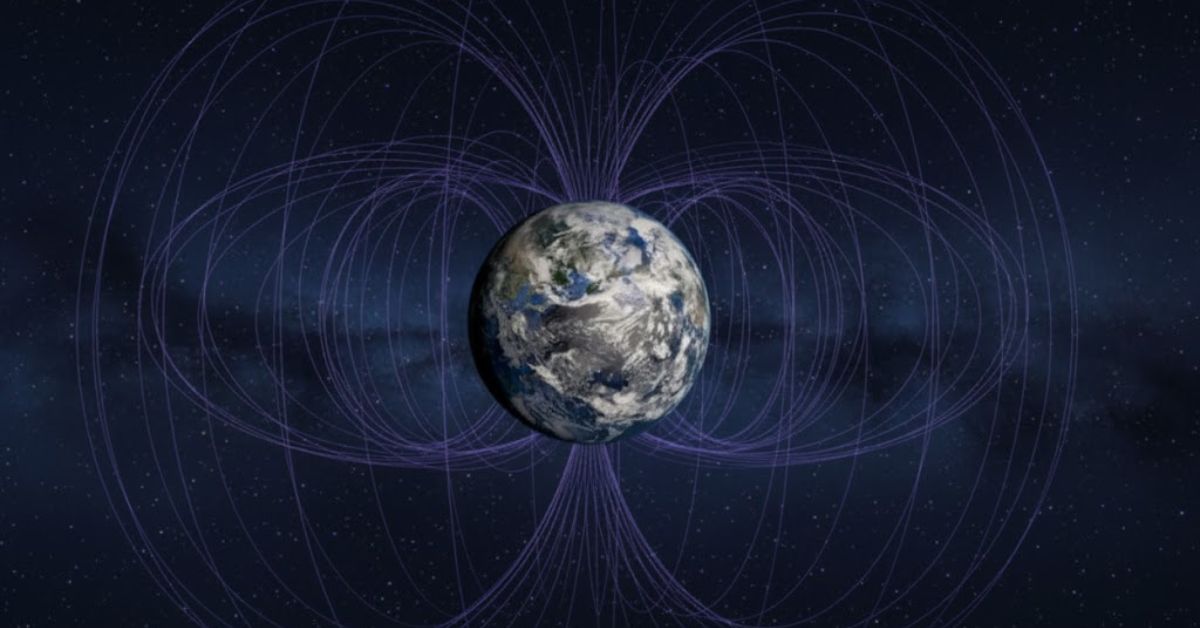
A Calm Look at a Dramatic Question
Magnetic Pole: Public anxiety around the idea of a shifting Magnetic often rises whenever new scientific papers or social media rumours appear. For decades, the Pole has been portrayed as a mysterious force capable of flipping without warning, creating dramatic headlines that travel far beyond scientific circles. Yet the science behind the Magnetic suggests a far calmer reality—one grounded in data, history and careful observation rather than fear. As researchers continue examining the slow drift of the Pole, they explain why the idea of an imminent flip is far from what the evidence currently shows.
| Key Focus | Context |
|---|---|
| Main Topic | Magnetic Pole behaviour |
| Angle | Science-based clarity vs fear |
Why Understanding the Magnetic Pole Requires Looking Beneath Earth’s Surface
Understanding why the Magnetic behaves the way it does starts with looking at Earth’s interior, where molten iron flows in vast currents. These currents create a constantly evolving magnetic field, and the Magnetic Pole slowly responds to these changes rather than jumping suddenly. Scientists analysing the Magnetic Pole use satellite readings, geological samples and historical records to understand long-term patterns. What these studies show is that a flip of the Magnetic is neither overdue nor likely to erupt out of nowhere.
What Geological History Tells Us About the Magnetic Pole
Many people believe that a reversal of the Pole would be catastrophic, but history paints a different picture. Geological layers preserve evidence of countless ancient reversals, showing that life survived, ecosystems adapted and the Pole settled into new positions each time. The most important lesson researchers emphasise is that transitions in the Magnetic Pole happen over thousands of years, not days or decades. This slow movement means the Magnetic Pole gives the planet ample time to adjust.
Why Drift Does Not Equal Danger
When reports show that the Magnetic Pole is speeding up or drifting, headlines sometimes frame it as a sign of chaos. But scientists studying the Magnetic Pole explain that drift is a natural part of the system’s fluid dynamics. The outer core’s swirling motion guides the Magnetic Pole gradually, sometimes shifting faster, sometimes slower. What matters is that the Magnetic Pole remains stable in its overall behaviour, offering no indication of an abrupt global reversal.
How Scientists Track the Magnetic Pole in Real Time
Modern technology has made it easier than ever to monitor the Magnetic from space. Satellites track subtle changes and map how the Pole moves across the Arctic region. With improved precision, scientists can also measure how the Pole interacts with solar activity, giving them a clearer picture of long-term behaviour. None of this data shows the Pole preparing for a sudden or dramatic shift.
Why Myths About the Magnetic Pole Spread So Easily
Misconceptions about the Magnetic Pole often spread faster than scientific explanations. Some claim that birds or planes would lose navigation if the Magnetic Pole reversed instantly, but experts say that systems gradually adjust as the Magnetic Pole shifts. These misunderstandings grow because dramatic scenarios attract attention, but the Magnetic Pole does not behave like a switch being flipped without warning.
Could the Magnetic Pole Affect Technology? Scientists Say No
People also wonder whether the Pole could affect electricity grids or communication networks. Research teams studying geomagnetic activity agree that while solar storms influence technology, the Pole itself is not a direct threat. Even during ancient reversals, the Pole changed so slowly that natural systems adapted seamlessly. Today’s instruments allow scientists to track the Pole with far greater clarity, giving modern infrastructure plenty of time to prepare for any long-term changes.
Geological Records Reveal the Magnetic Pole’s Long Story
Geological records across the world offer a deep timeline of how the Pole has evolved. Lava flows, sea-floor minerals and sediment layers show the Pole drifting back and forth long before humans existed. This long archive makes it clear that the Pole behaves according to predictable geological rhythms. When researchers look at the Pole today, they see the same steady pattern continuing.
Why a Flip of the Magnetic Pole Is Not Near
Speculation about when the Pole might flip usually grows during periods of fast drift, but scientists emphasise that speed alone is not a trigger. The Pole moves under the influence of Earth’s outer-core flow, not short-term disturbances. This is why forecasts for the Pole rely on long spans of data rather than sudden headlines. At present, the Pole shows patterns entirely consistent with stable field behaviour.
Using Simulations to Understand the Magnetic Pole’s Future
Computer simulations help scientists visualise how the Pole may evolve centuries from now. These models incorporate past reversals, present drift and the internal dynamics shaping the Pole. Even extreme simulations fail to show the Pole flipping suddenly, reinforcing what geological records already prove. The overall message is that the Pole remains stable, steady and far from the edge of reversal.
Why the Magnetic Pole Appears More Dramatic in Headlines
Media attention often turns the Pole into a dramatic storyline. Headlines hint at danger, but scientific discussions show a calmer narrative where the Pole undergoes slow, natural changes. When the public hears about drift, they sometimes misunderstand it as instability, when in reality the Pole continues behaving normally. This gap between news and data keeps the Pole surrounded by unnecessary mystery.
Conclusion: The Magnetic Pole Is Not Preparing for a Flip
At the heart of the discussion is a simple truth: the Pole is shifting, but not in a way that signals immediate danger. Researchers emphasise that the Pole has drifted for centuries without causing disruption. In fact, the Pole remains one of the most stable indicators of Earth’s internal behaviour. As long as scientists continue monitoring the Pole, they can offer reliable guidance grounded in evidence. For now, the Pole is not preparing for a flip, and understanding this helps separate science from fear. And by learning how the Pole functions, the public gains clarity instead of panic.